FUKUOKA FAMIL - SEPT 2026
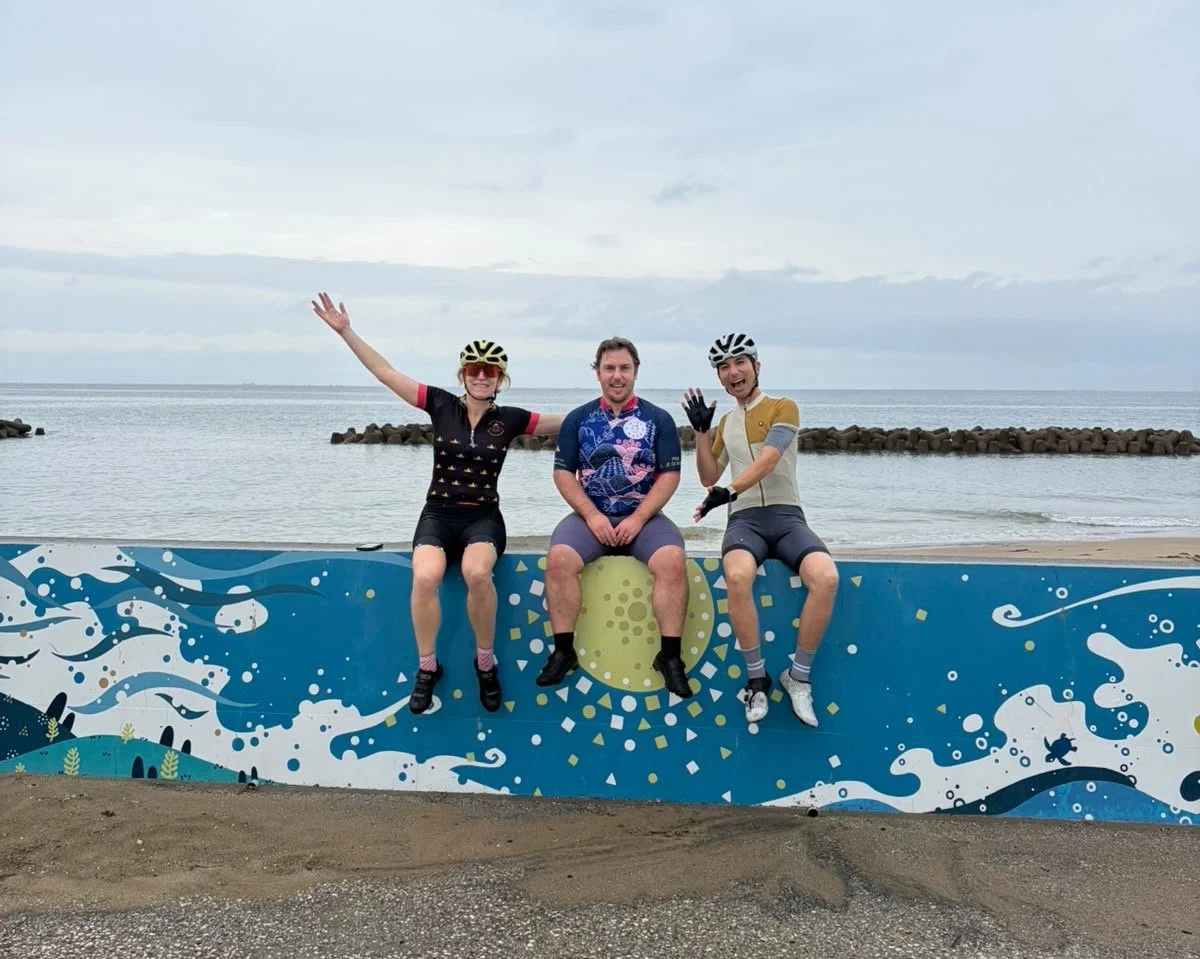
My good friend and Wide Open Road mechanic Rob, of newly launched Heiden Cycle Works, and I were lucky enough to be invited to Fukuoka Prefecture for another famil trip (familiarisation tour). The aim was to broaden our knowledge of the region, explore its cycling possibilities and help us develop interesting itineraries for future Wide Open Road tours.
Fukuoka Prefecture lies in northern Kyushu, the southernmost of Japan’s four main islands, bordered by the Sea of Japan to the north and west. Having been operating tours in Japan for a number of years now, Wide Open Road launched its first Kyushu Tour in 2025, exploring some of the prefecture’s highlights, including beautiful Shikanoshima Island just off the coast of Fukuoka City, the spectacular terraced tea fields of Yame, and Ukiha, a region celebrated for its abundant fruit orchards. Having experienced this wonderful corner of Kyushu, we were keen to venture further afield and discover what else the prefecture had to offer cyclists.
Day 1: Climbing Gokayama and exploring Yanagawa
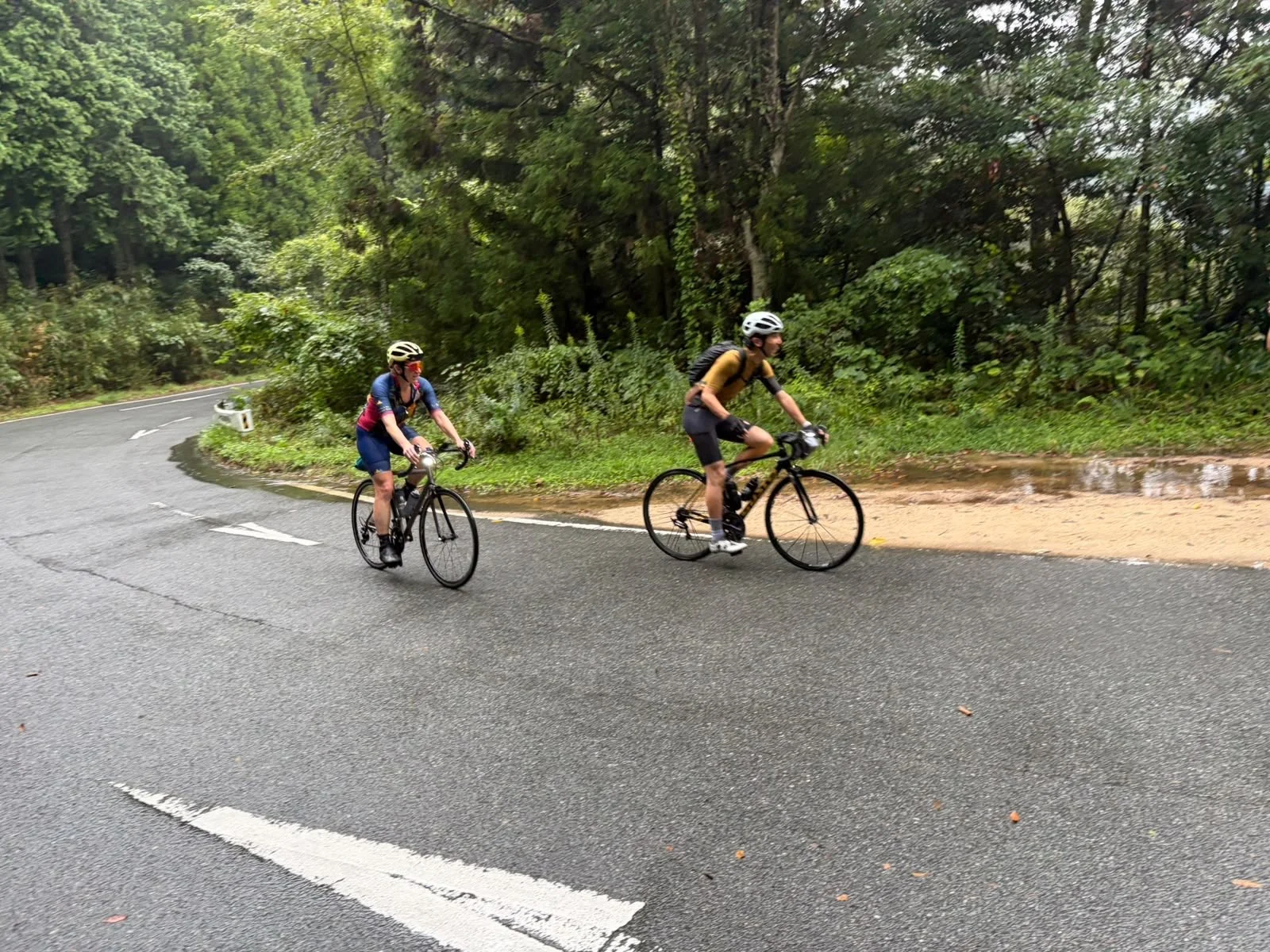
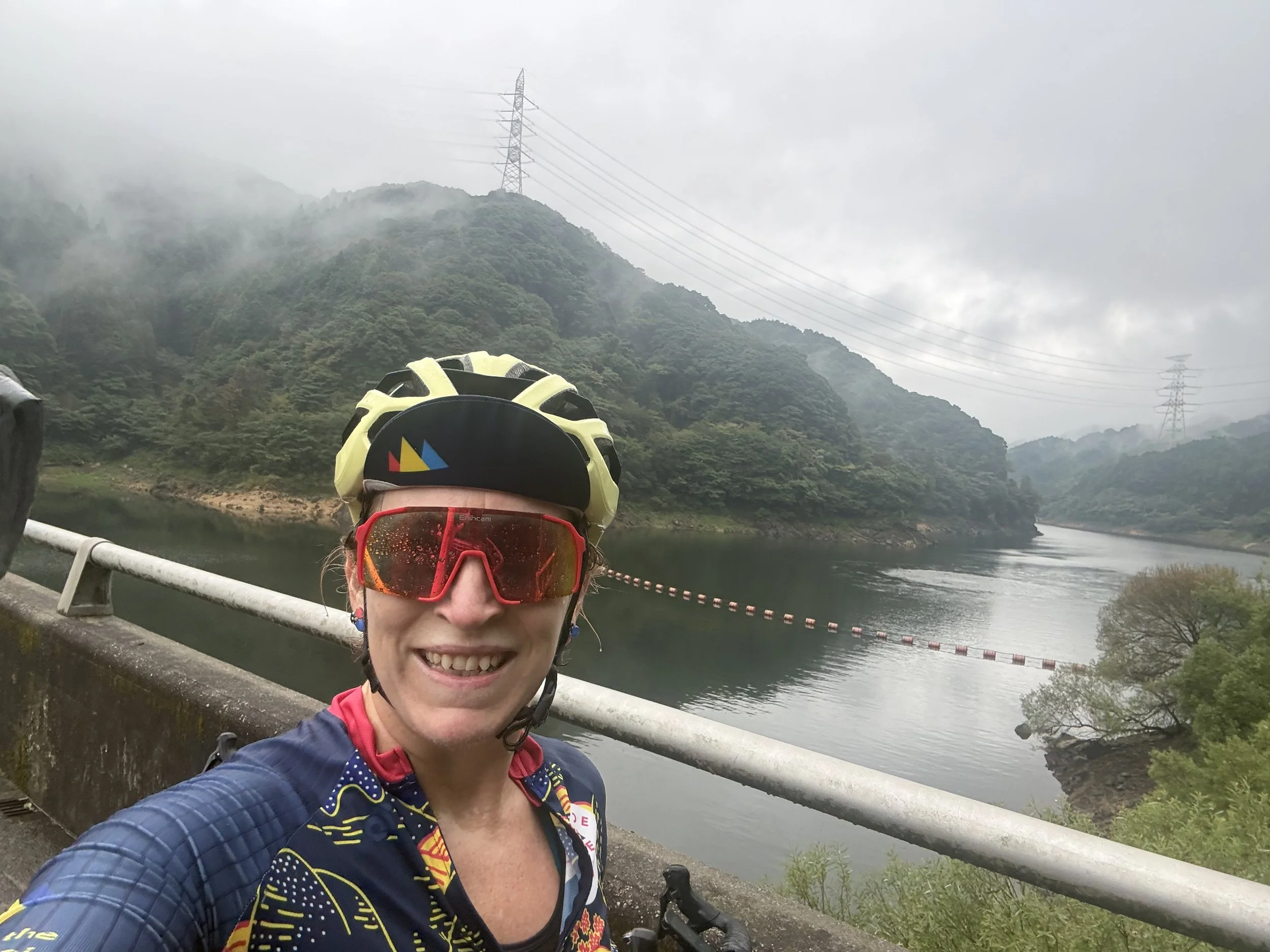
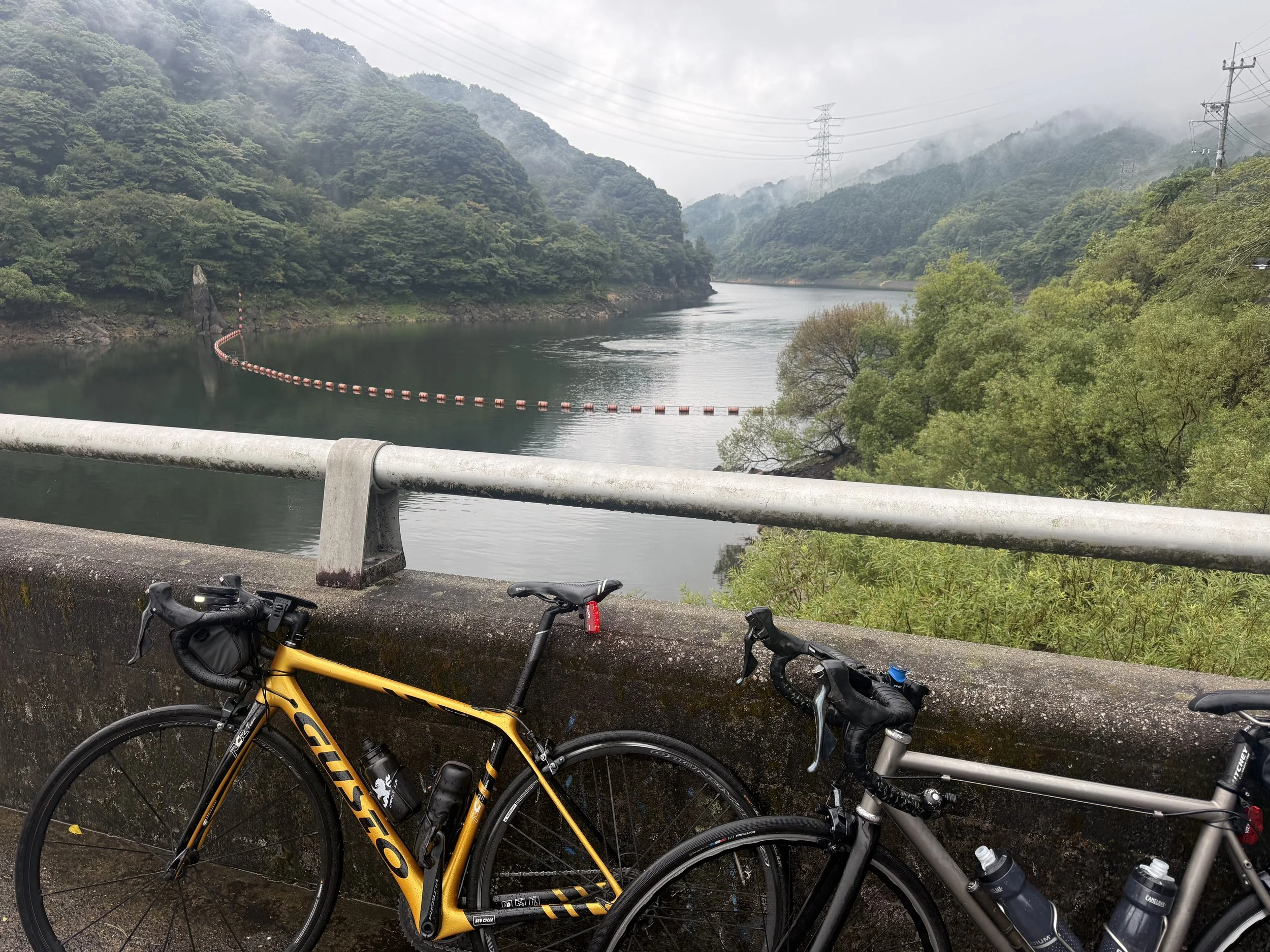
Our first ride took us up to Gokayama Dam, a favourite training ground for local cyclists in the mountains just outside Fukuoka City. The steady 11 km climb follows smooth, winding roads through the forest, with occasional dedicated cycling lanes and glimpses of the surrounding mountains before opening up around the dam and reservoir. It was easy to see why this is such a popular local ride.
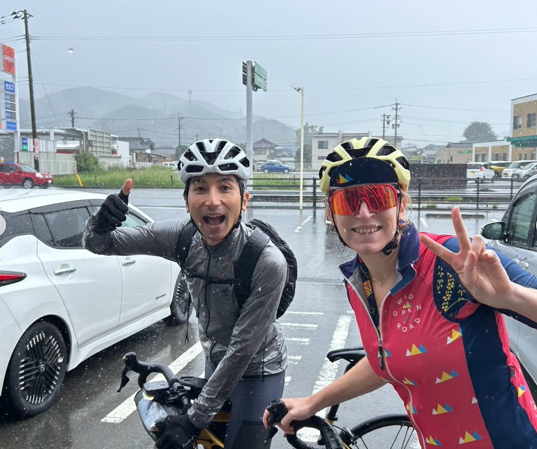
It was a great warm-up as I followed Yoshida-san, our local cycling guide for the next three days, up the climb. With his lean racing physique, Zen-like calm and enormous smile, he made it all look effortless — even while pushing out 300-plus watts as I desperately tried to hang on to his wheel!
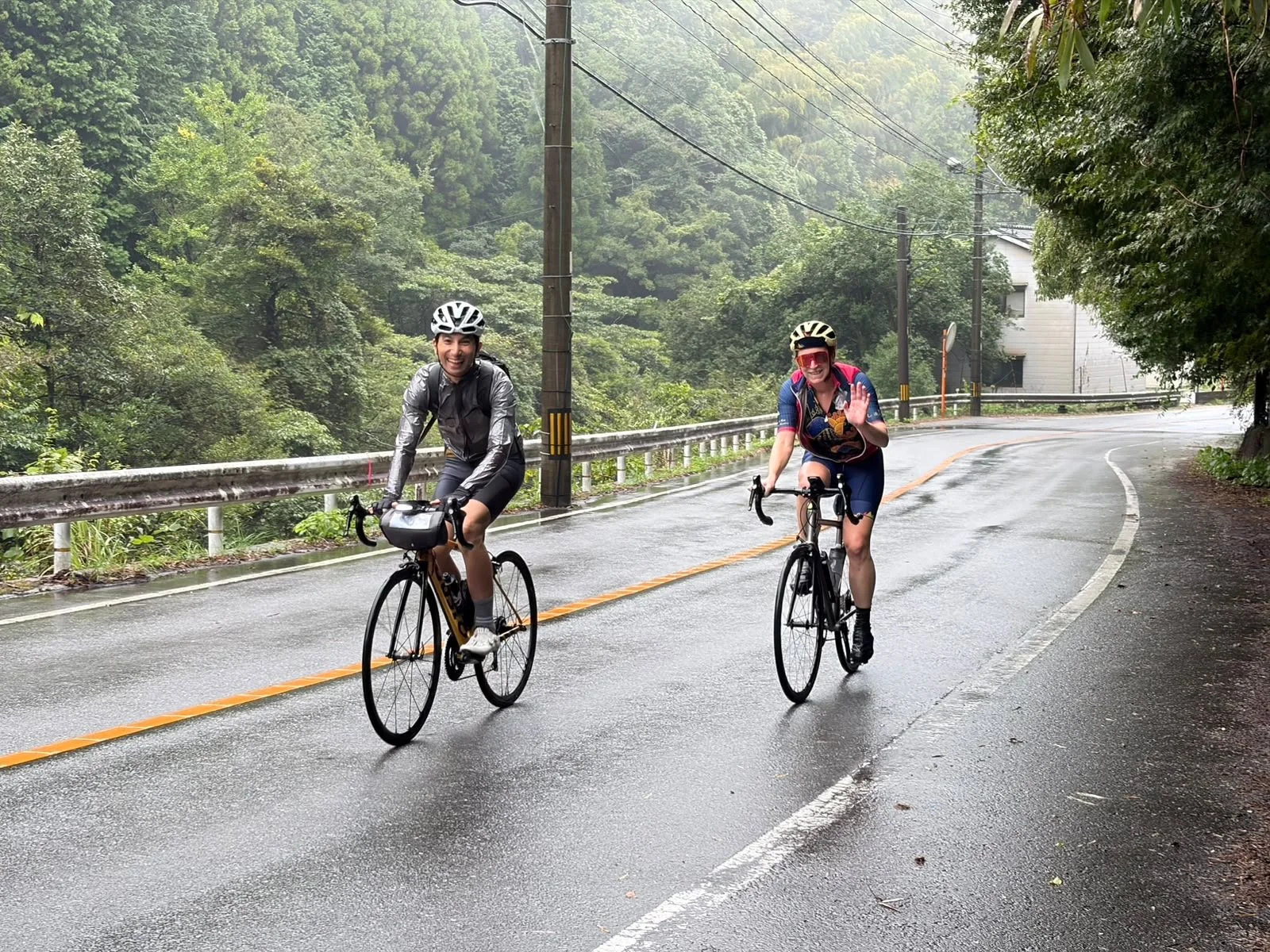
Me, trying to hang on to Yoshida-san’s wheel on the climb to Gokayama
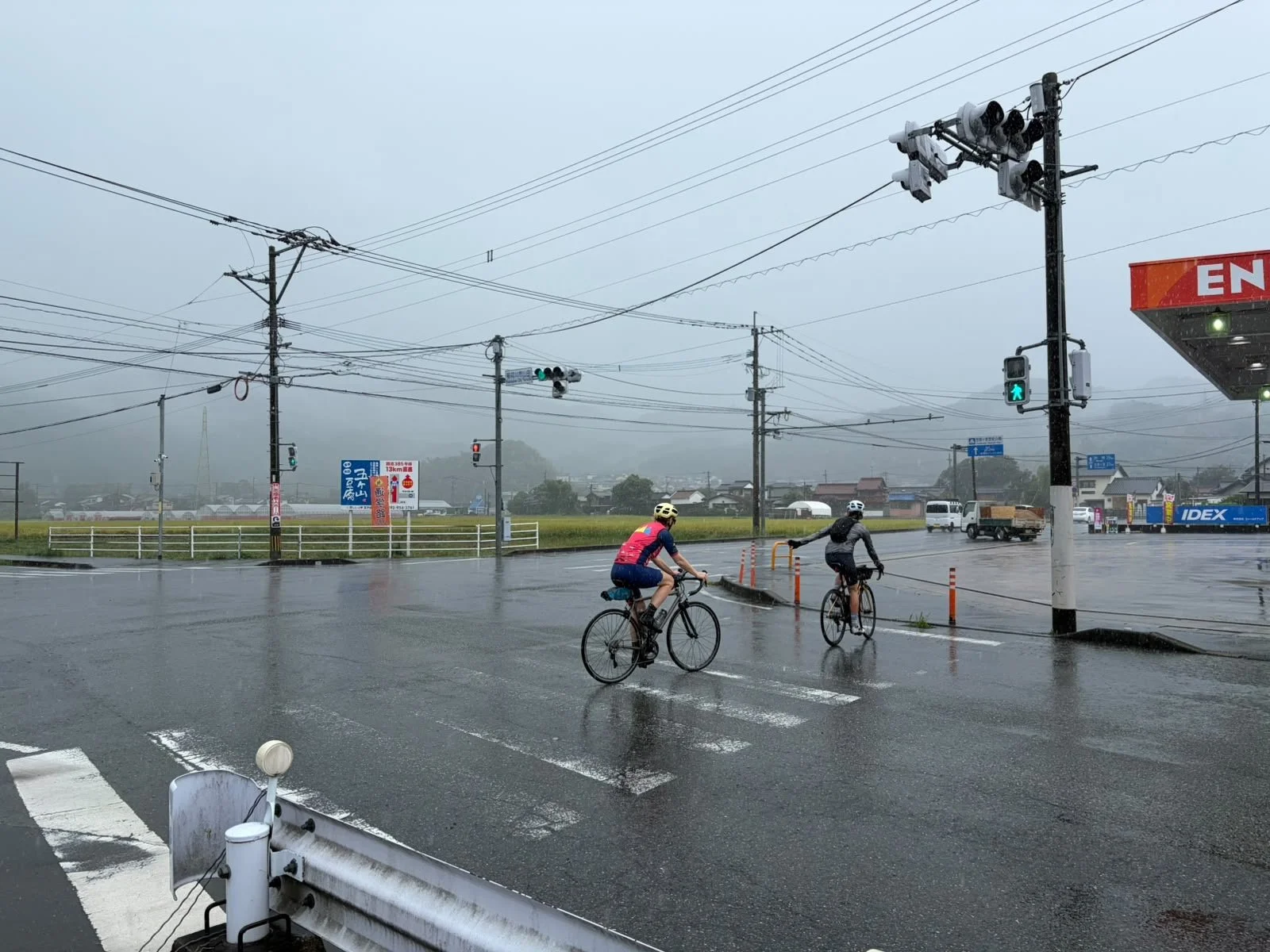
Unfortunately, the rain cut our ride short. The descent towards neighbouring Saga Prefecture would have been spectacular, but there was plenty more to discover on two wheels over the coming days.
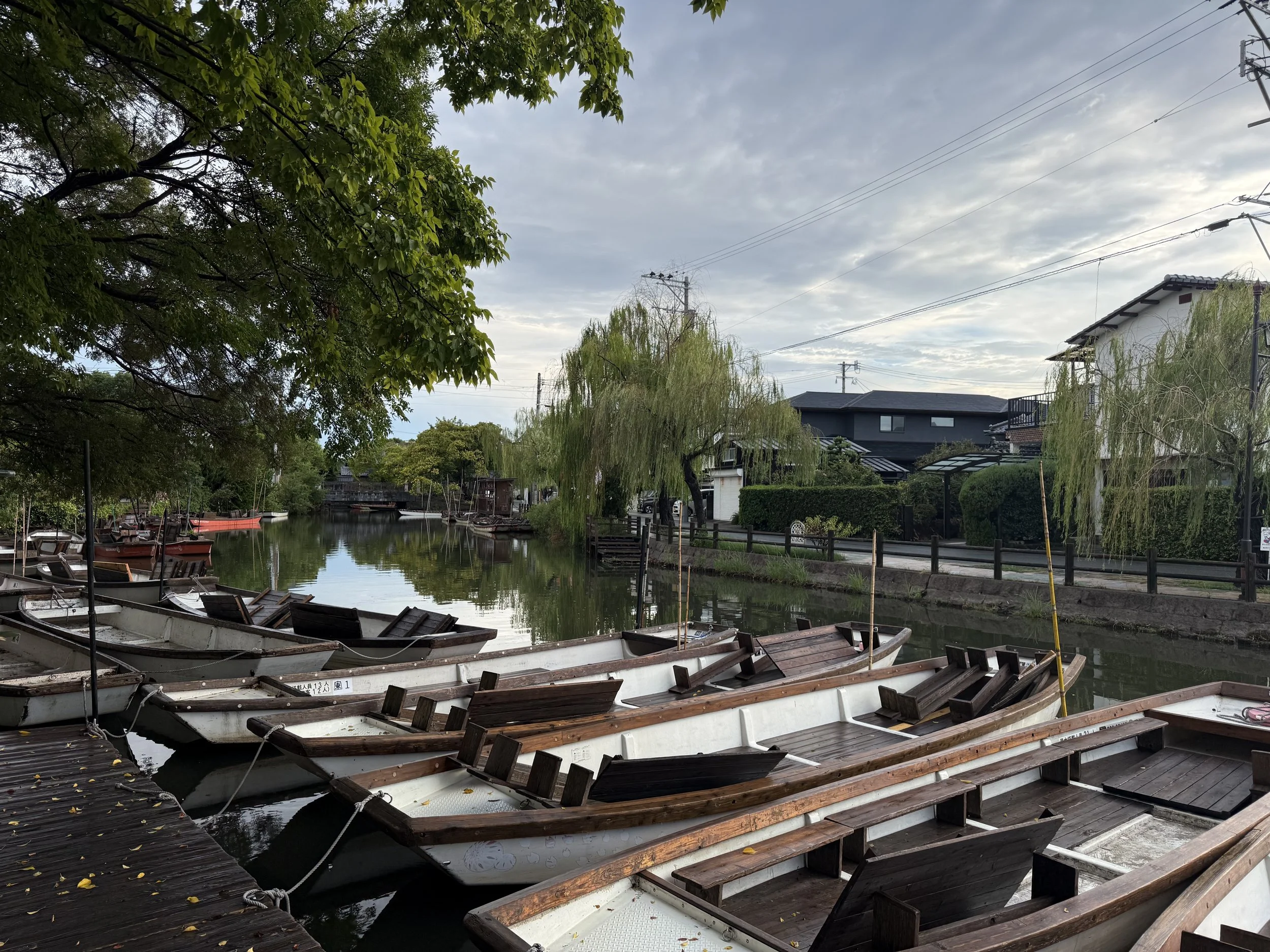
Instead, we explored Yanagawa on foot, often nicknamed the Venice of Kyushu. This historic castle town is criss-crossed by hundreds of kilometres of waterways, originally developed for irrigation and later incorporated into the town’s defensive network during Japan’s feudal era. Today, the canals are one of its defining features, with traditional flat-bottomed boats gliding beneath willow trees and past historic buildings.
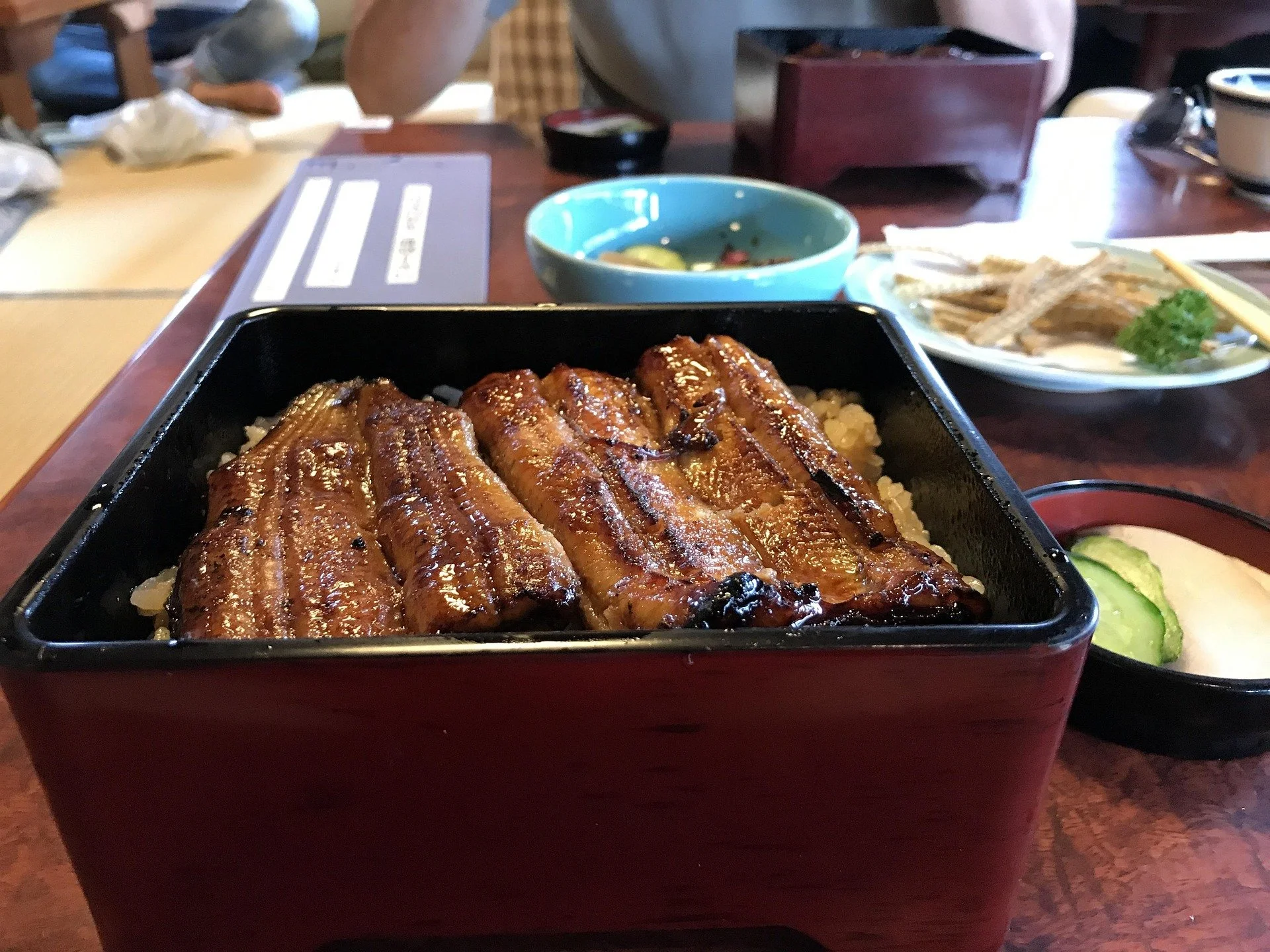
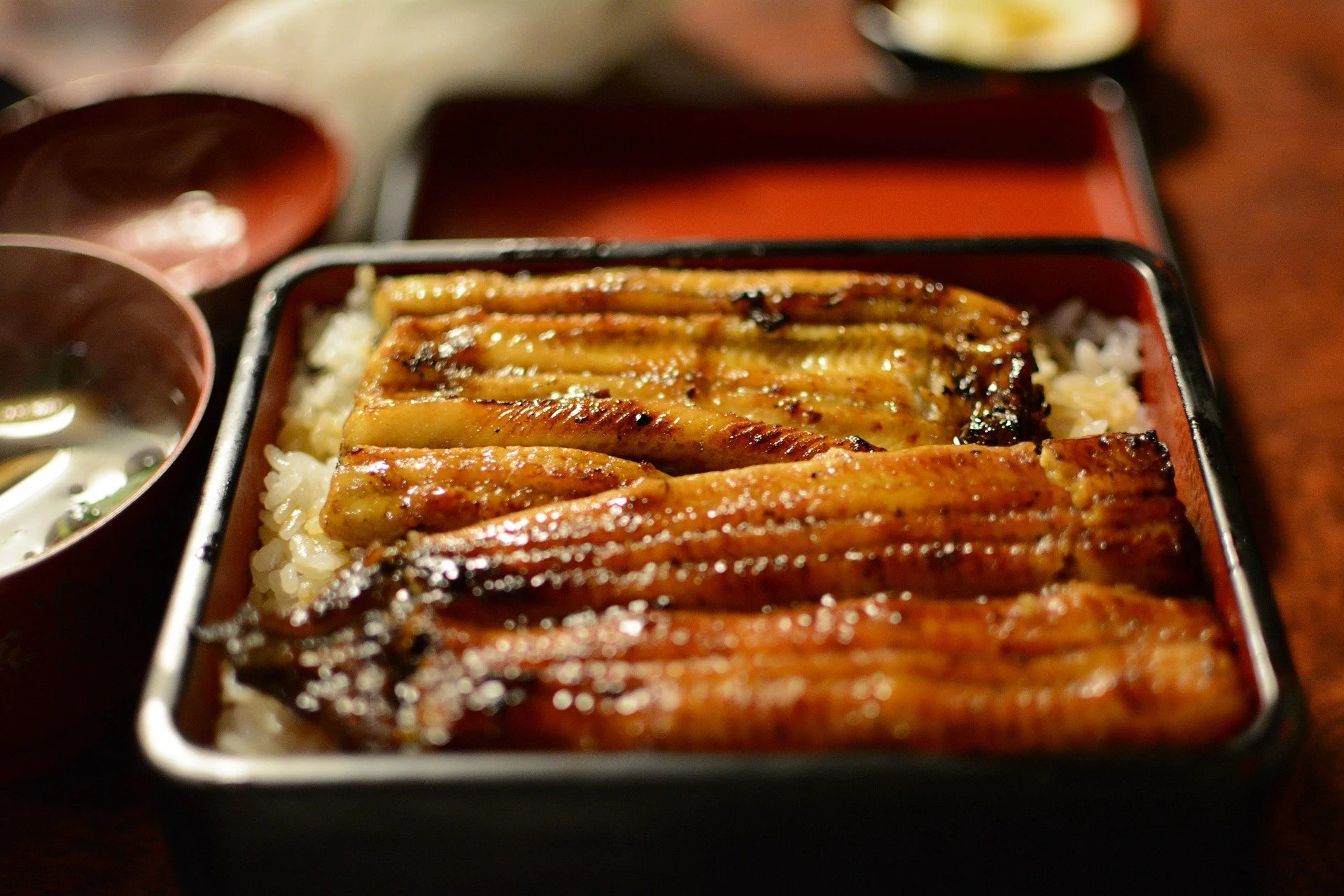
We feasted on oishii (delicious) unagi (eel), served in beautifully presented lacquered boxes. Yanagawa’s signature dish, unagi no seiro-mushi, combines grilled eel and egg over rice, all steamed together in a bamboo basket — a local speciality with roots stretching back to the Edo period.
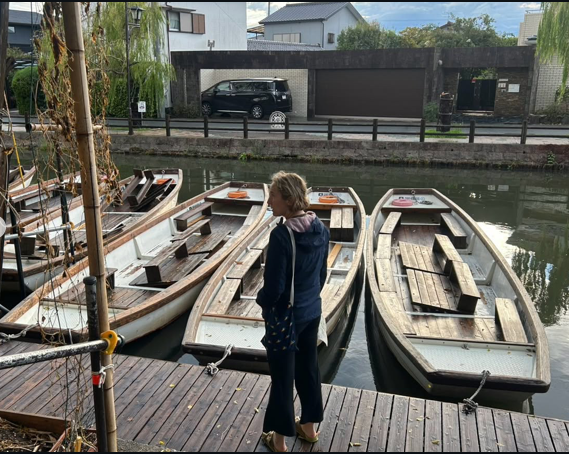
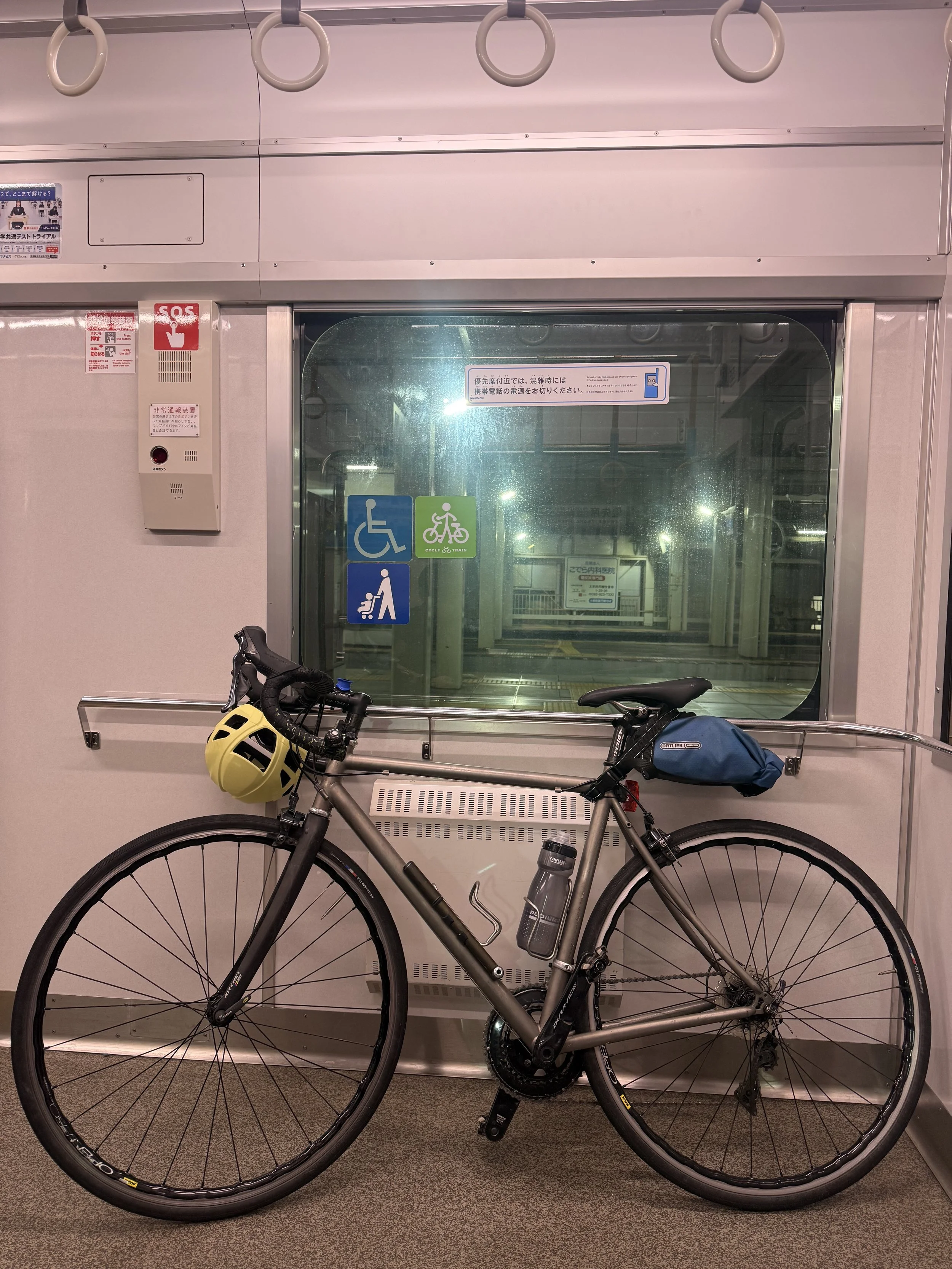
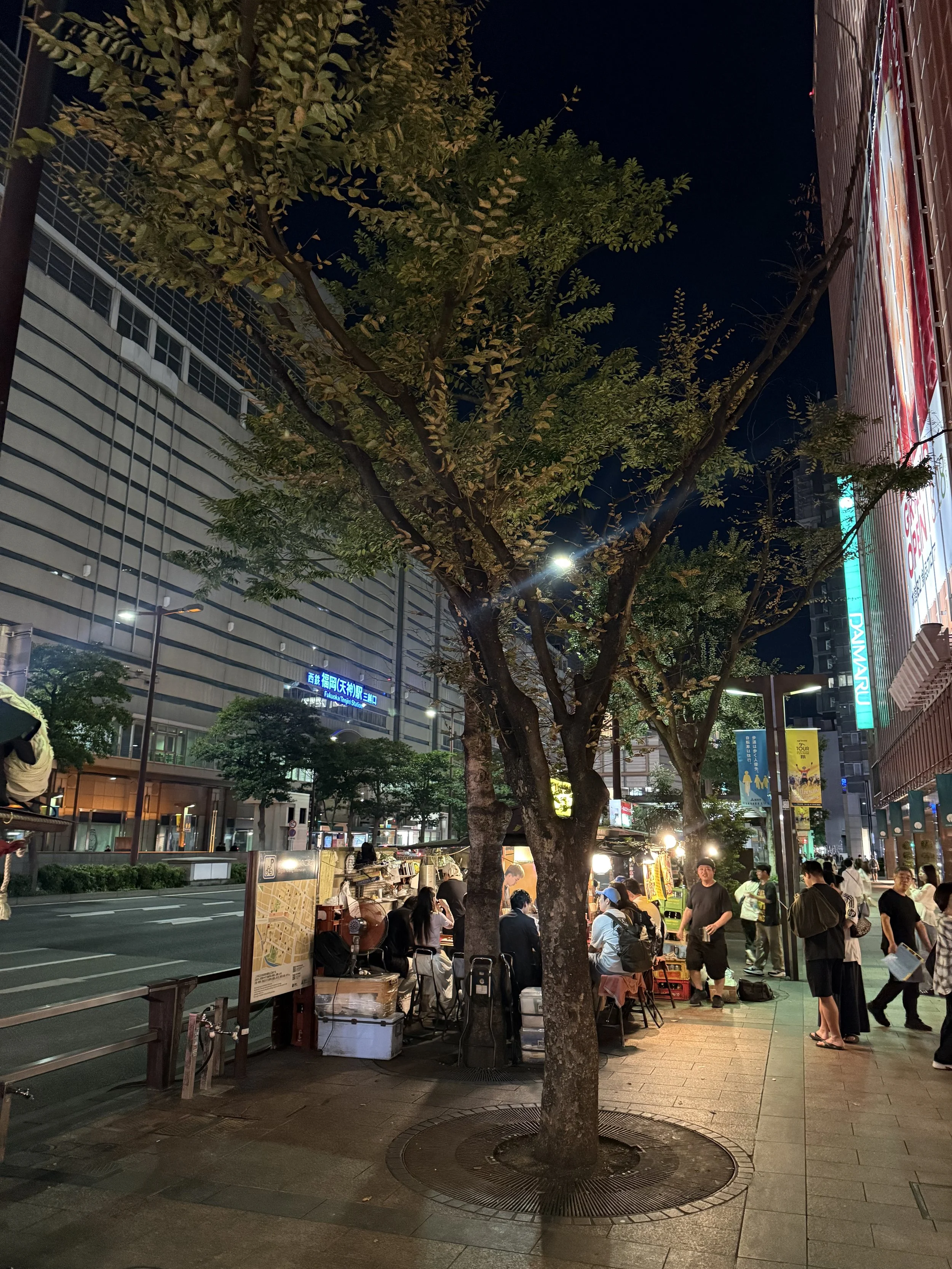
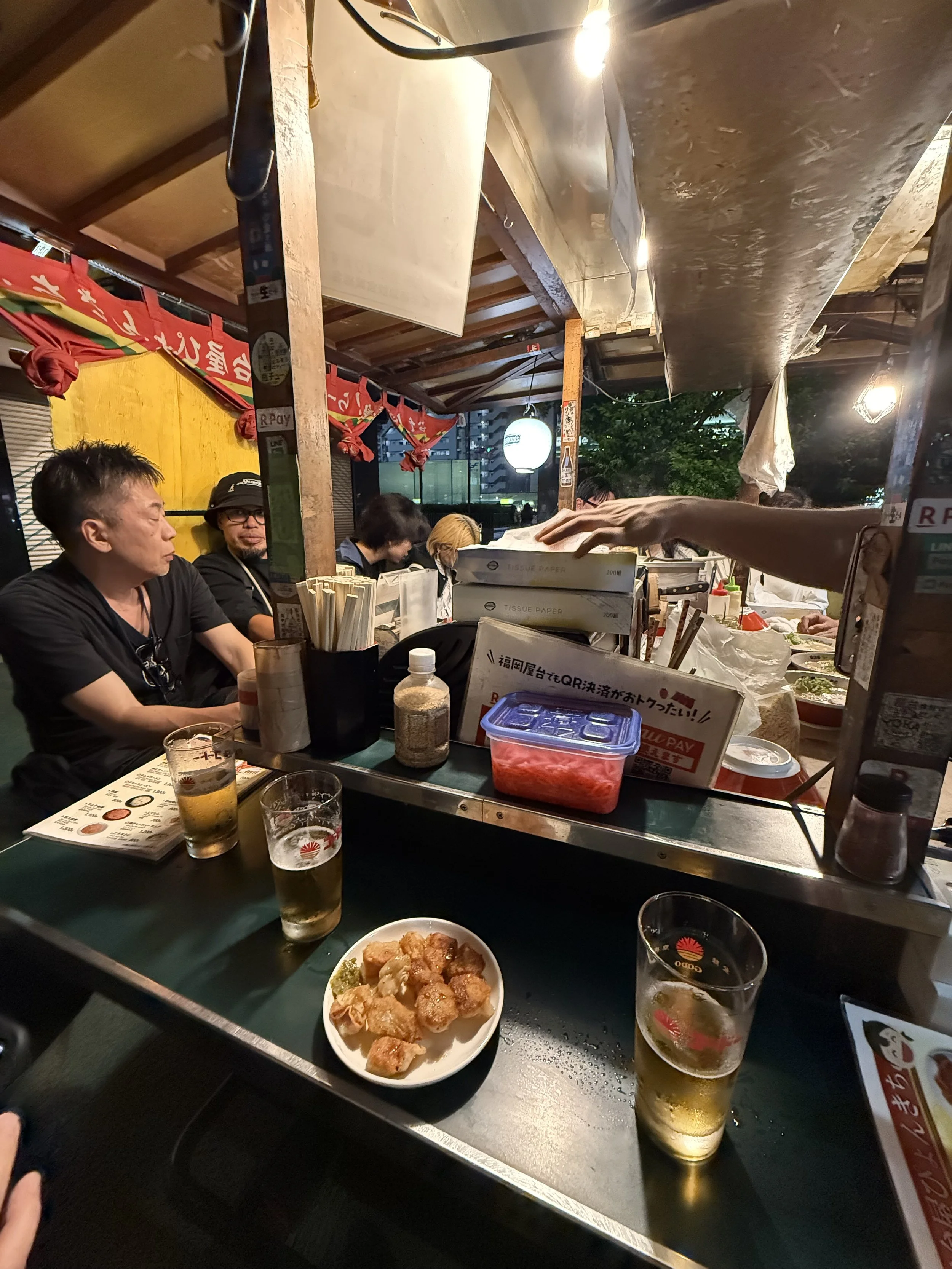
The team was particularly excited for me to experience the Nishitetsu “bicycle train”, where you can take your bike aboard without the usual rinko bag (a lightweight bicycle bag used to carry a disassembled or partially disassembled bike on Japanese trains). They couldn’t believe this was normal in Australia! We whizzed back through the rice paddies and tea fields towards Fukuoka’s lively Tenjin district, home to the famous yatai — open-air street food stalls that come alive in the evening — and the city’s vibrant nightlife.
Day 2: Coastal cycling and traditional pottery
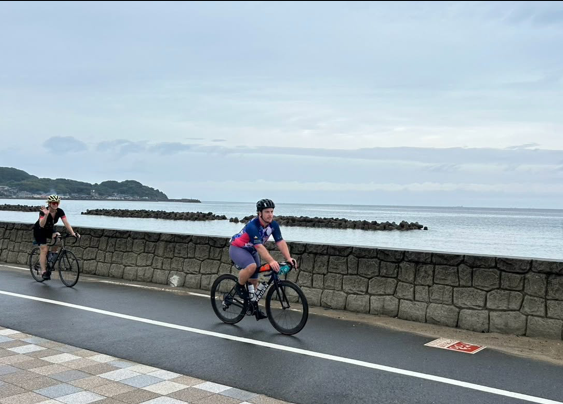
Day two took us along Fukuoka’s northern coast around Munakata, where it was clear that considerable effort is going into developing cycling tourism. Dedicated off-road cycling paths, rider rest stops and information points all help make the region more accessible to cyclists. Some sections were a little overgrown, and we saw only a couple of other riders on a drizzly Saturday morning, which left me wondering how much local traffic these routes attract. Still, there is real potential here, particularly for riders looking to explore the quieter coastline away from the main roads.
We continued in drizzly rain along the Onga river - the off road sealed cycle trail another key part of Fukuoka prefecture’s dedicated cycling routes, that they described on the Cycle Fukuoka page of the Visit Fukuoka website.- a one stop portal for cyclist’s keen on exploring the prefecture by bike. It’s a helpful website and great to see the work that is being put in to cycle tourism - with various ‘course’ options of long and short rides, associated cycle maps, key tourist points of interest, and Ride With GPS routes for download. Helpful for solo travellers or cycle tour operators.
The highlight of the day for me was the final climb to Toho Village, tucked into the mountains of eastern Fukuoka. This peaceful rural community is renowned for its pottery, with a tradition stretching back more than 350 years and around 50 kilns still operating in the area.
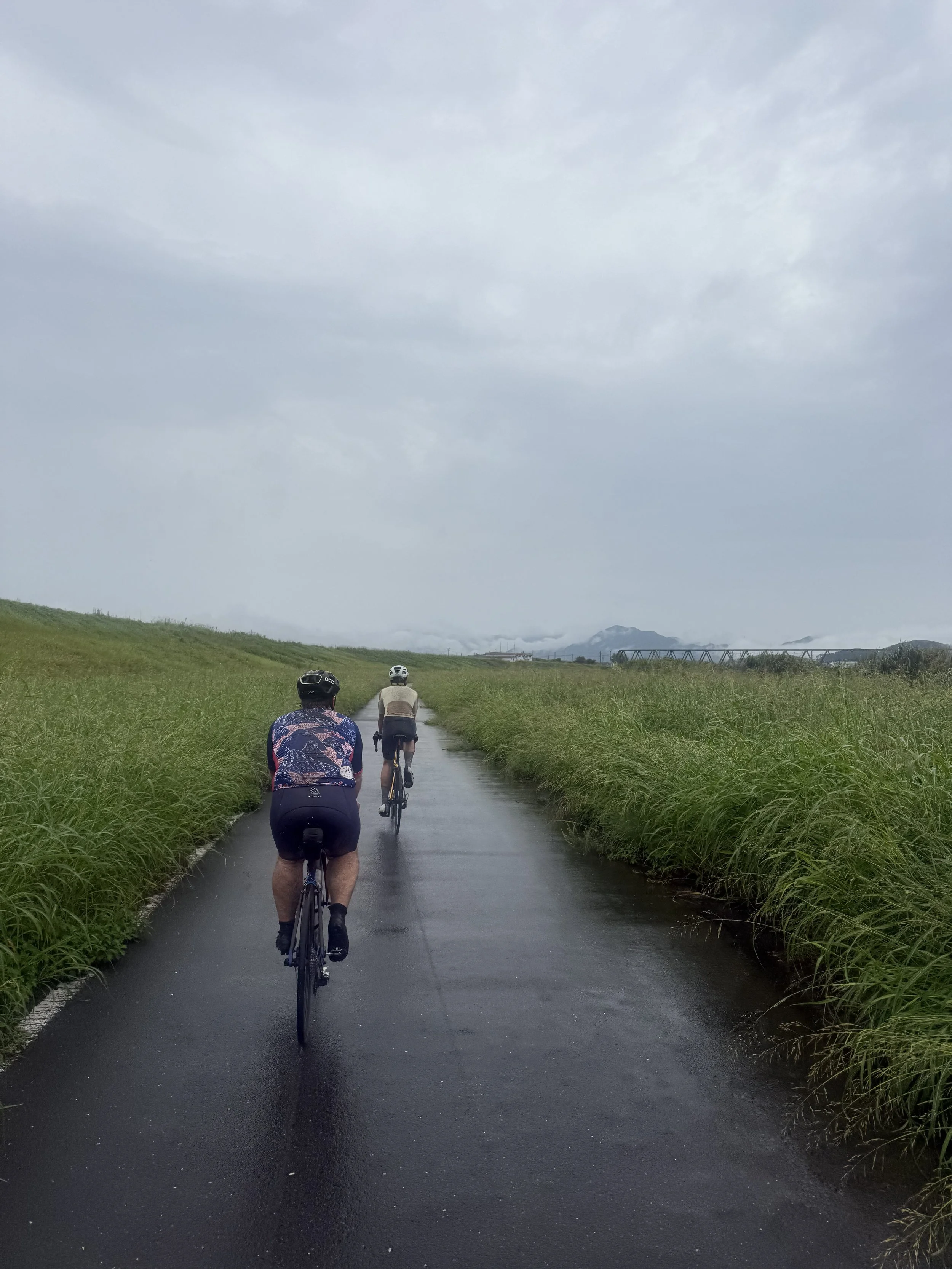
Day 2 - river cycle paths

Toho village pottery at the Michi no Eki
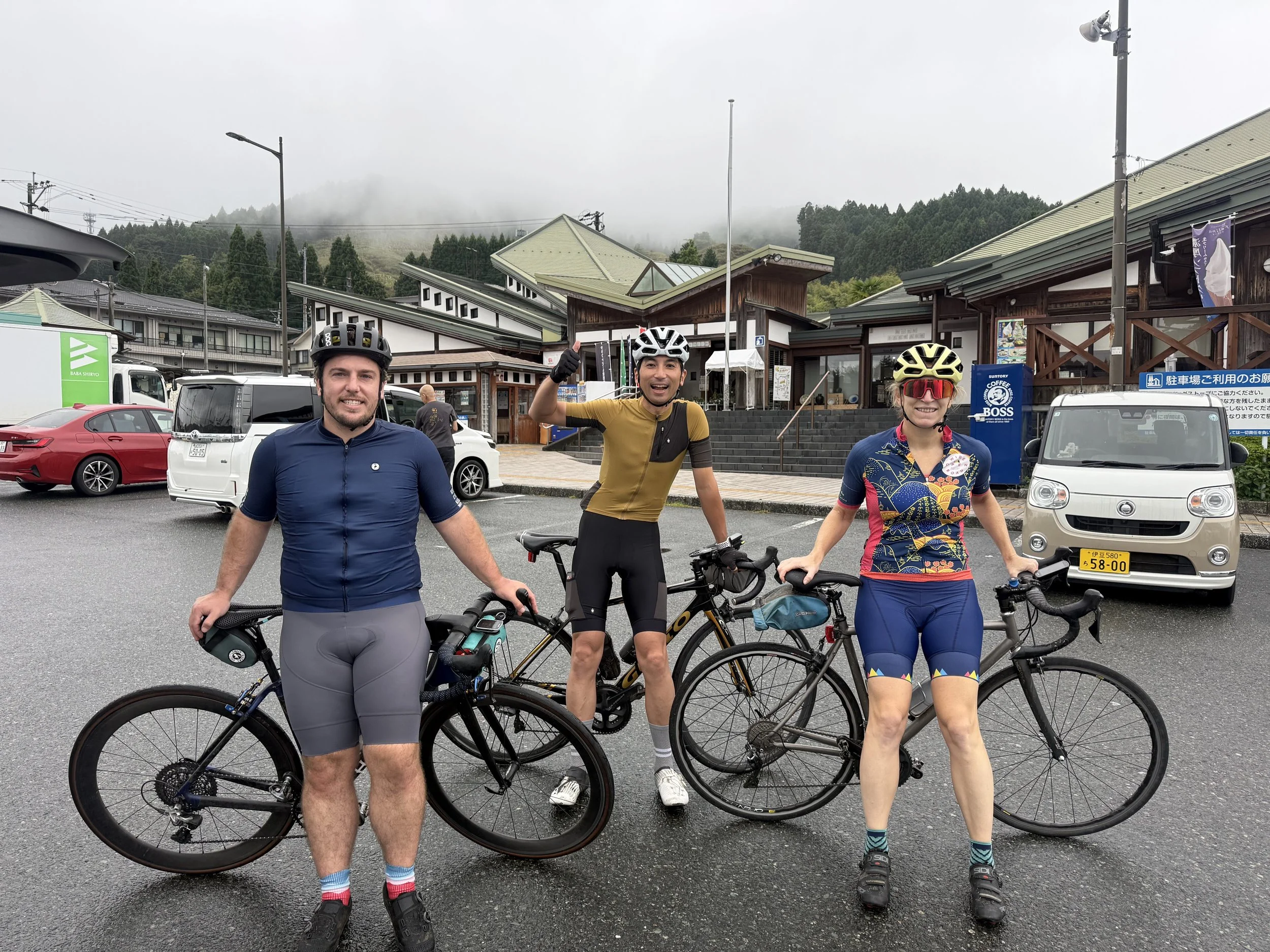
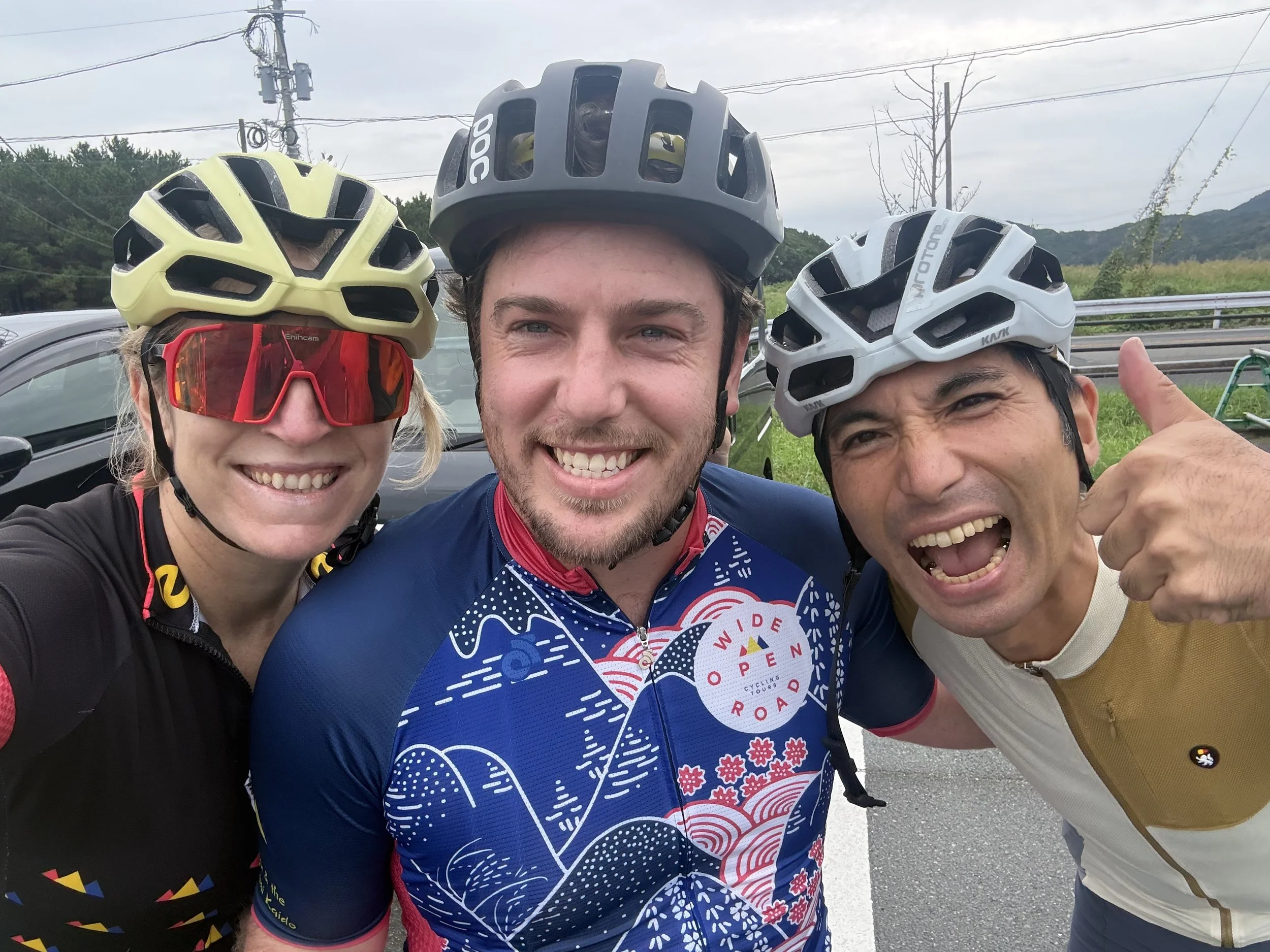
The crew!
The village is particularly associated with Koishiwara-yaki, a distinctive folk pottery tradition established in the 17th century. Its practical tableware is known for earthy glazes and decorative techniques such as tobikanna, which creates rhythmic patterns of marks across the clay, and hakeme, which leaves expressive brushstrokes on the surface. I couldn't resist picking up a few souvenirs, and I'm already enjoying my Yame gyokuro tea at home in my new cups — a lovely reminder of the region.
Our routes and itinerary had been thoughtfully prepared by the team from Kyudensangyo, with Du-san and new team members Koshin-san and Maki-san supporting us along the way, and constantly asking if we wanted to stop cycling and get in the vehicles - I think they were astounded we would want to ride uphill for 10km… let alone in drizzly rain! They were always on hand with dry towels, umbrellas and a seemingly endless supply of snacks. It didn't take long for them to discover my favourites: mochi and Pocari Sweat!
Cyclists heading to Japan, take note: convenience stores are your friend. Between the onigiri, fruit smoothies, mochi, sweet treats and readily available sports drinks, you can leave your gels, bars and drink powders at home.
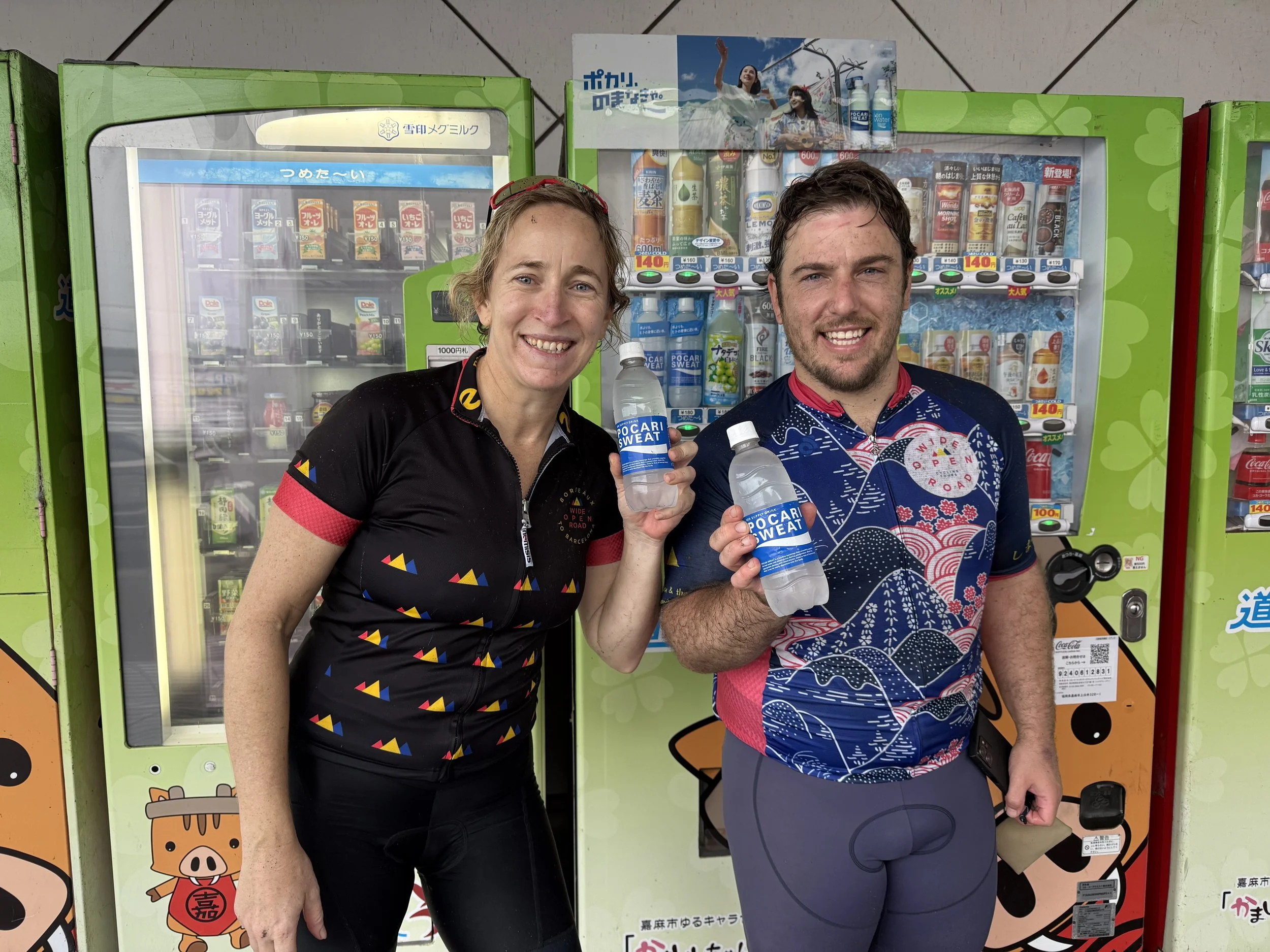
When cycling in Japan, vending machines are a cyclist’s best friend!
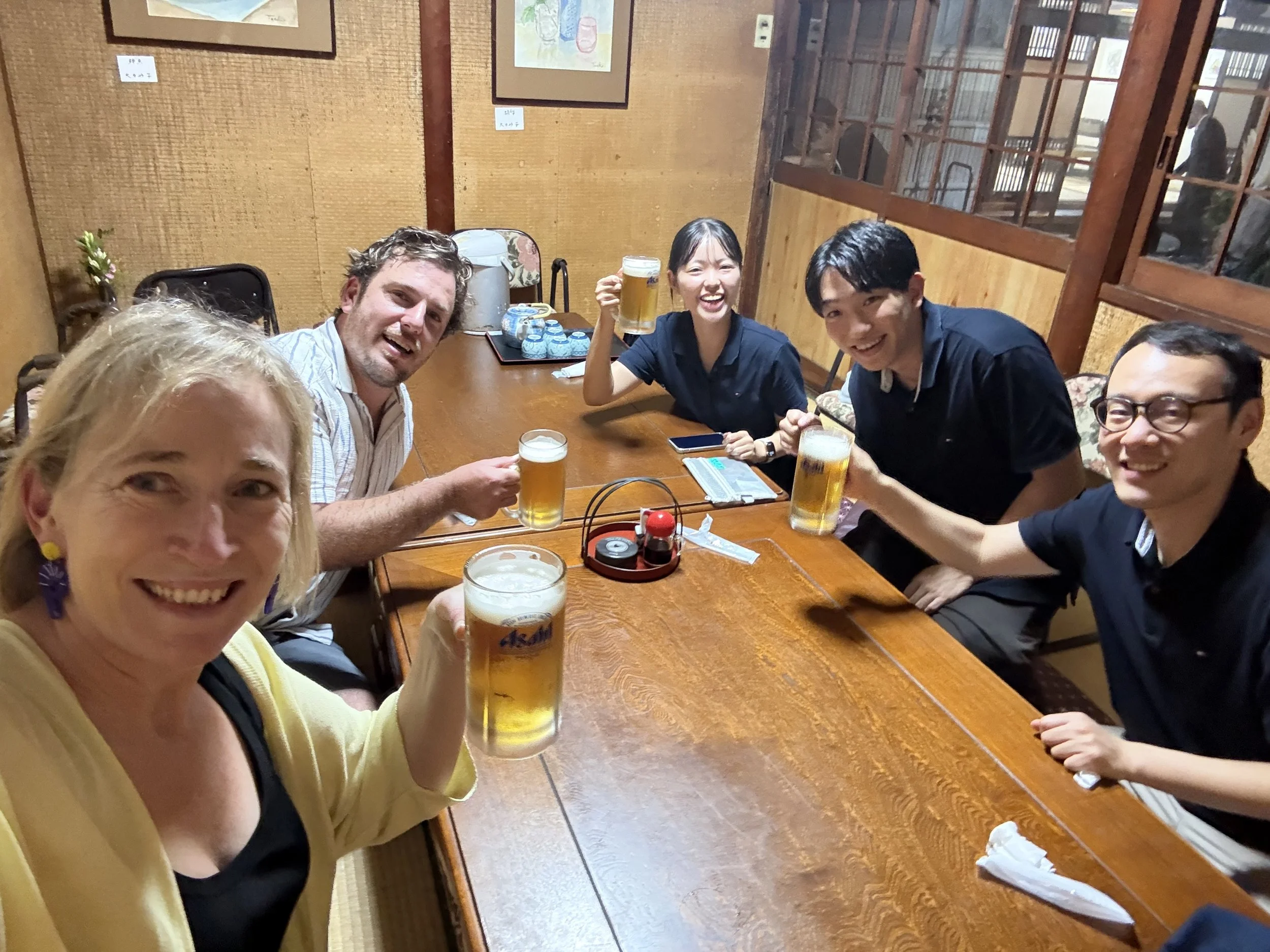
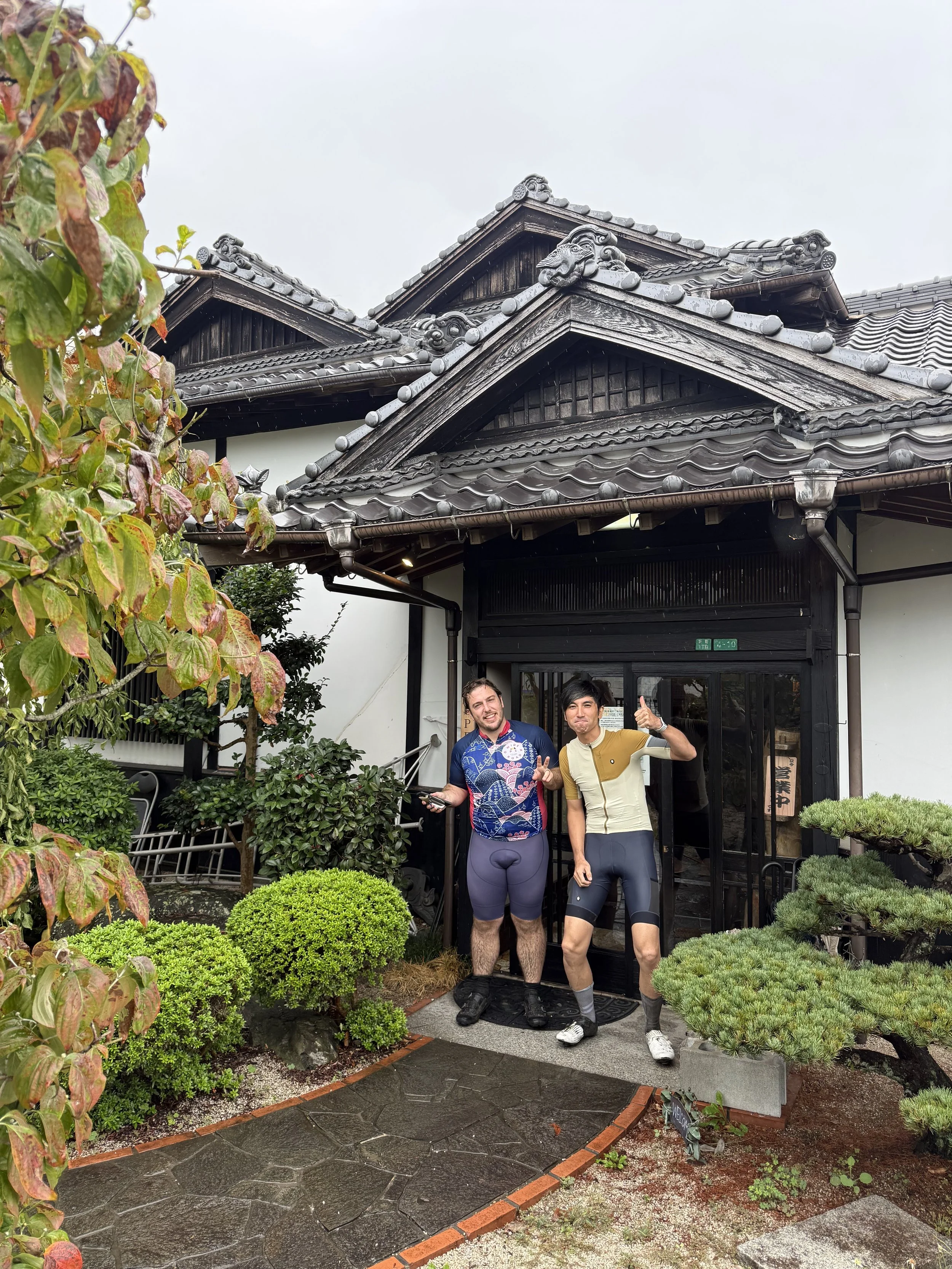
Us and the Kyudensangyo team after a long and slightly soggy day!
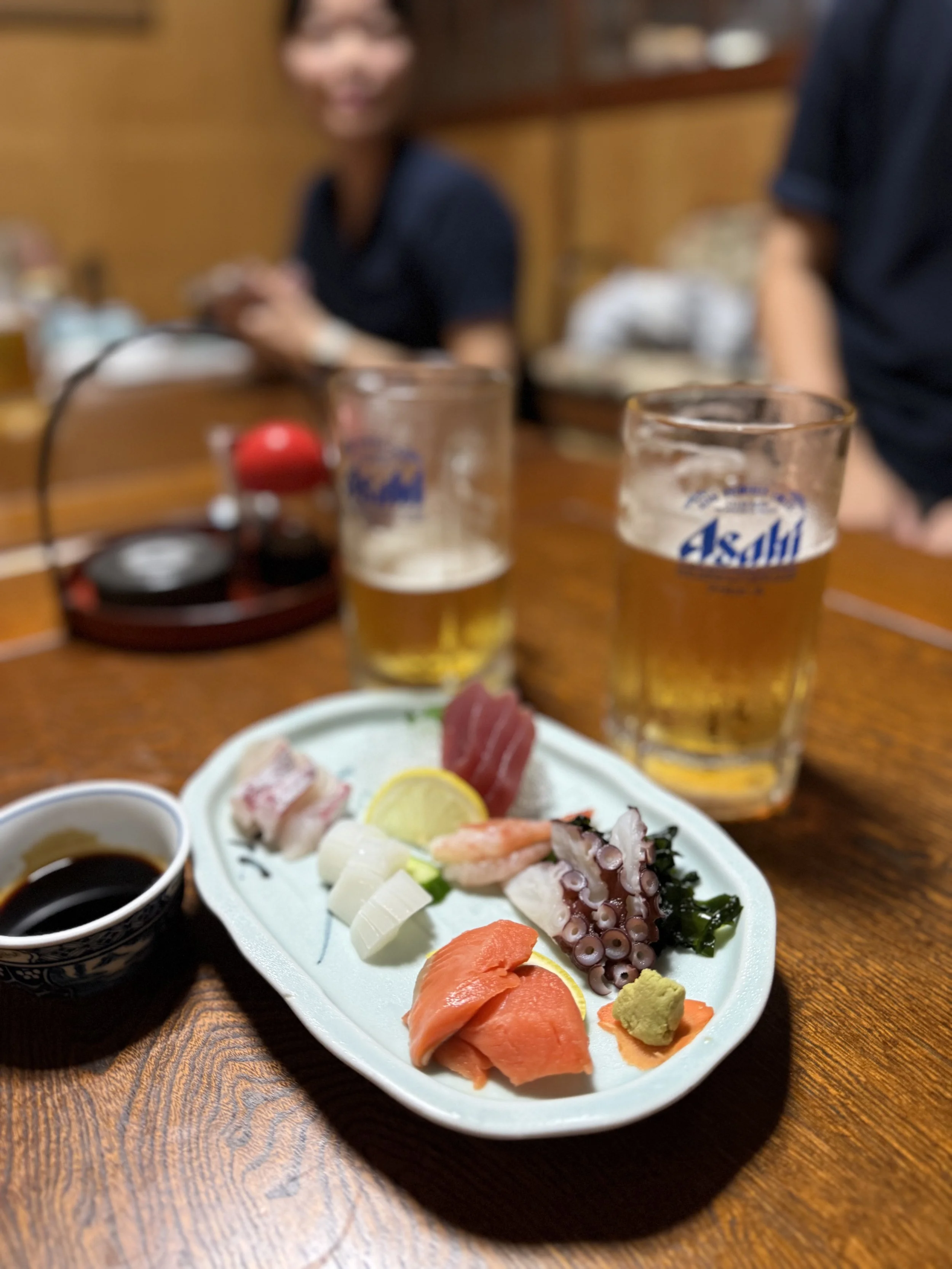
That evening, we sat around low tables on tatami mats in a typical local restaurant, sharing sashimi, udon and generous mugs of nama biiru (draught beer). Conversation wandered through daily life in Japan, electric vehicles and the future of cycle tourism. It was one of my favourite moments of the trip — simply relaxing with an incredibly kind and generous group of people who genuinely wanted to share the best of Fukuoka Prefecture with us.
Day 3: A sacred mountain and a little good fortune
Our final day brought another beautiful climb, this time to Hikosan (Mount Hiko), a sacred mountain in eastern Fukuoka with a long history of spiritual significance. For centuries, it was an important centre of Shugendo, a Japanese mountain ascetic tradition in which practitioners trained in the mountains to deepen their spiritual practice.
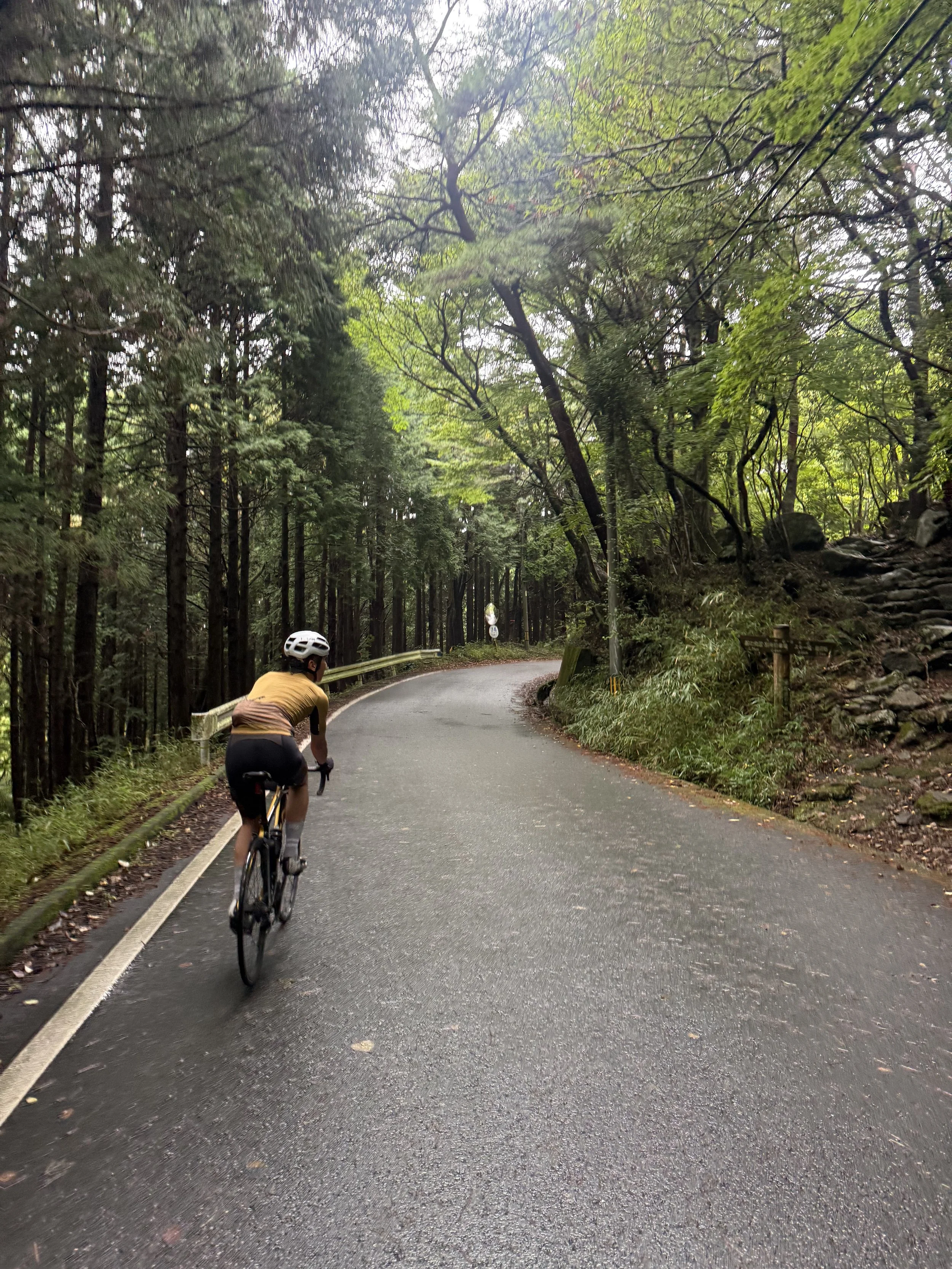
Chasing Yoshida-san up the Hikosan climb
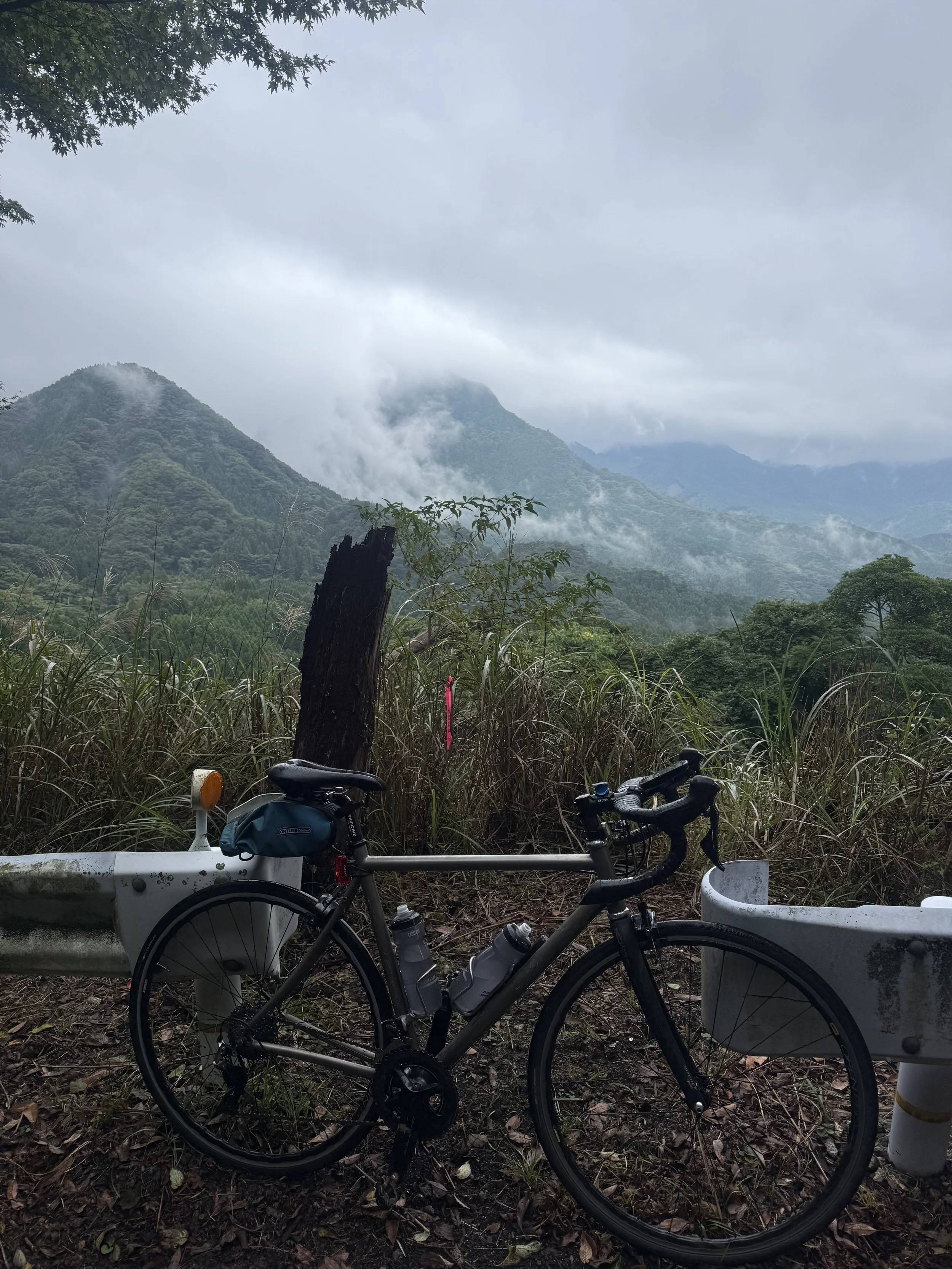
Views from Hikosan
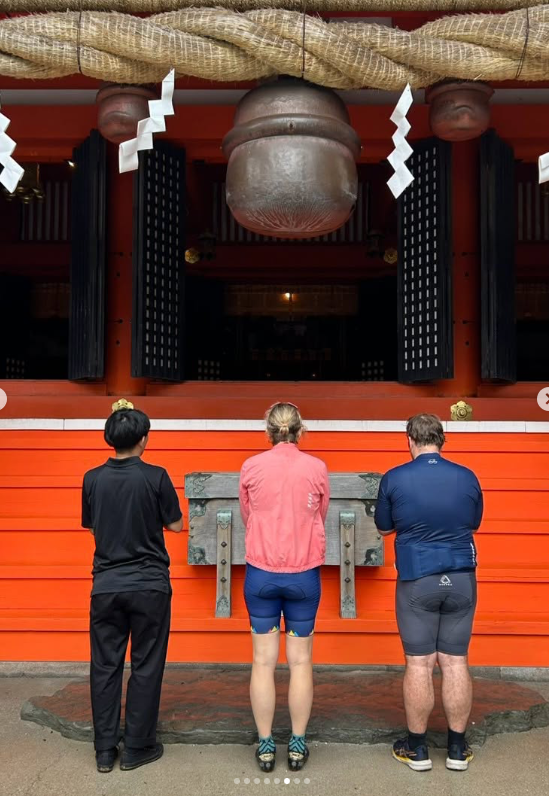
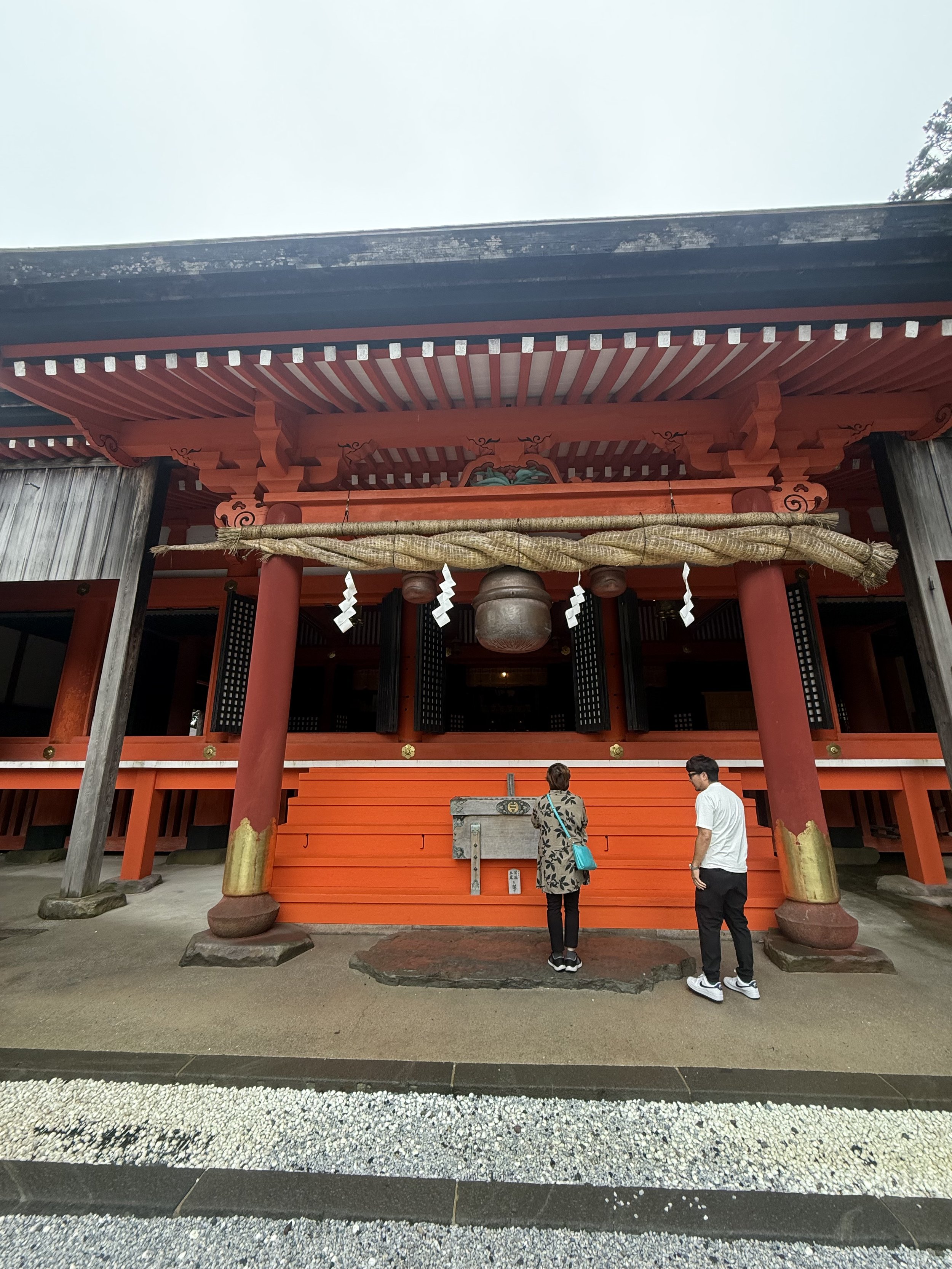
Hikosan Jingu
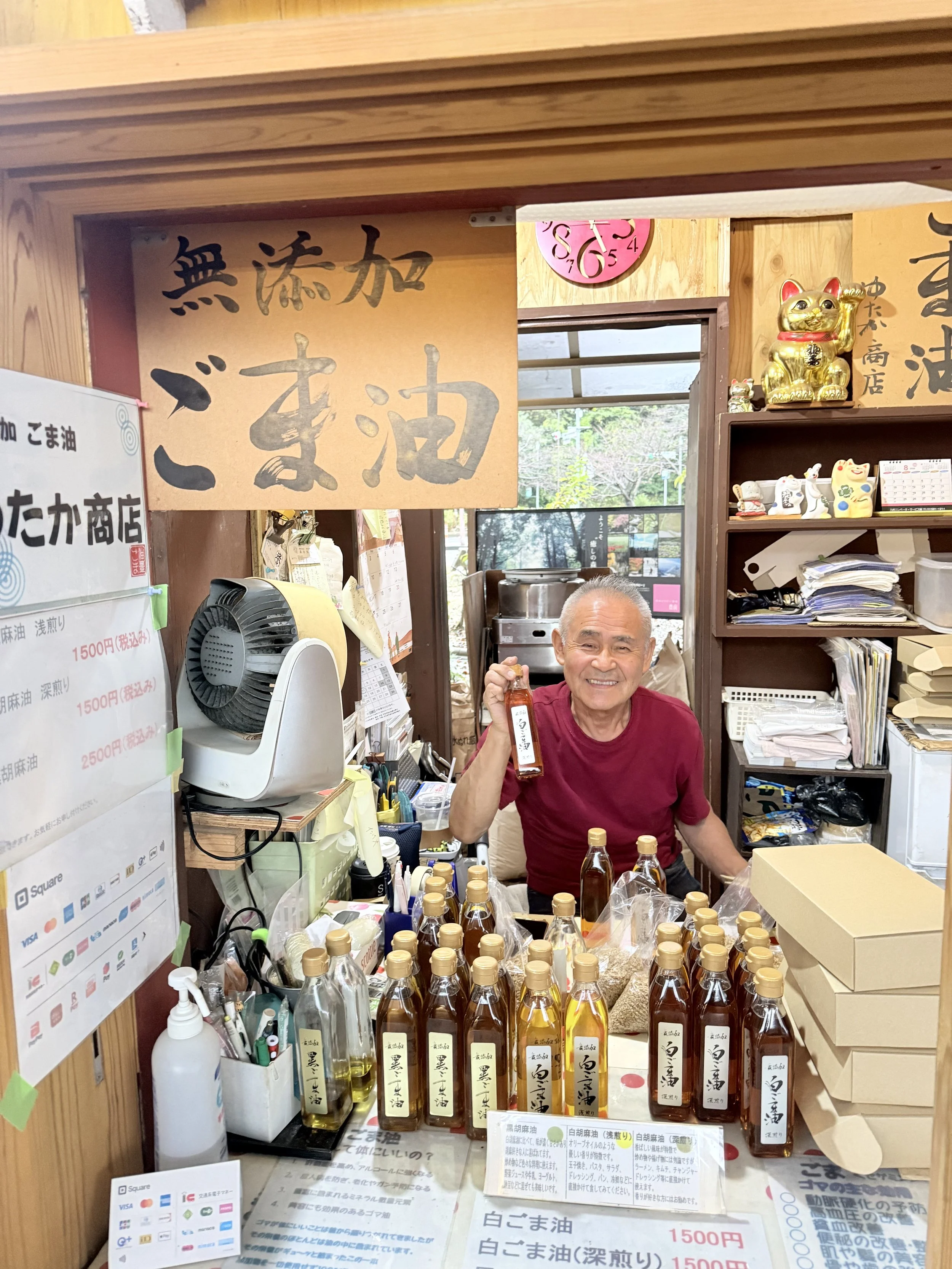
A local selling freshly roasted and pressed sesame oil at a roadside stall
The ride was a treat: tiny, winding mountain roads, moss-covered stonework and little shrines tucked into the forest along the way. It was a world away from the busy streets of Fukuoka City, and a wonderful reminder of how quickly the landscape changes once you head into the mountains of Kyushu.
We eventually reached Hikosan Jingu, the mountain's historic shrine complex, where a fun ropeway ride took us closer to the main shrine buildings. Koshin-san showed us how to pray and draw an omikuji — a traditional fortune slip — before we set off again. I was happy with my chū-kichi, or “medium luck”, and tucked the little piece of paper into my cycling wallet. Naturally, I asked for safe cycling on our upcoming WOR Kyushu Tour!
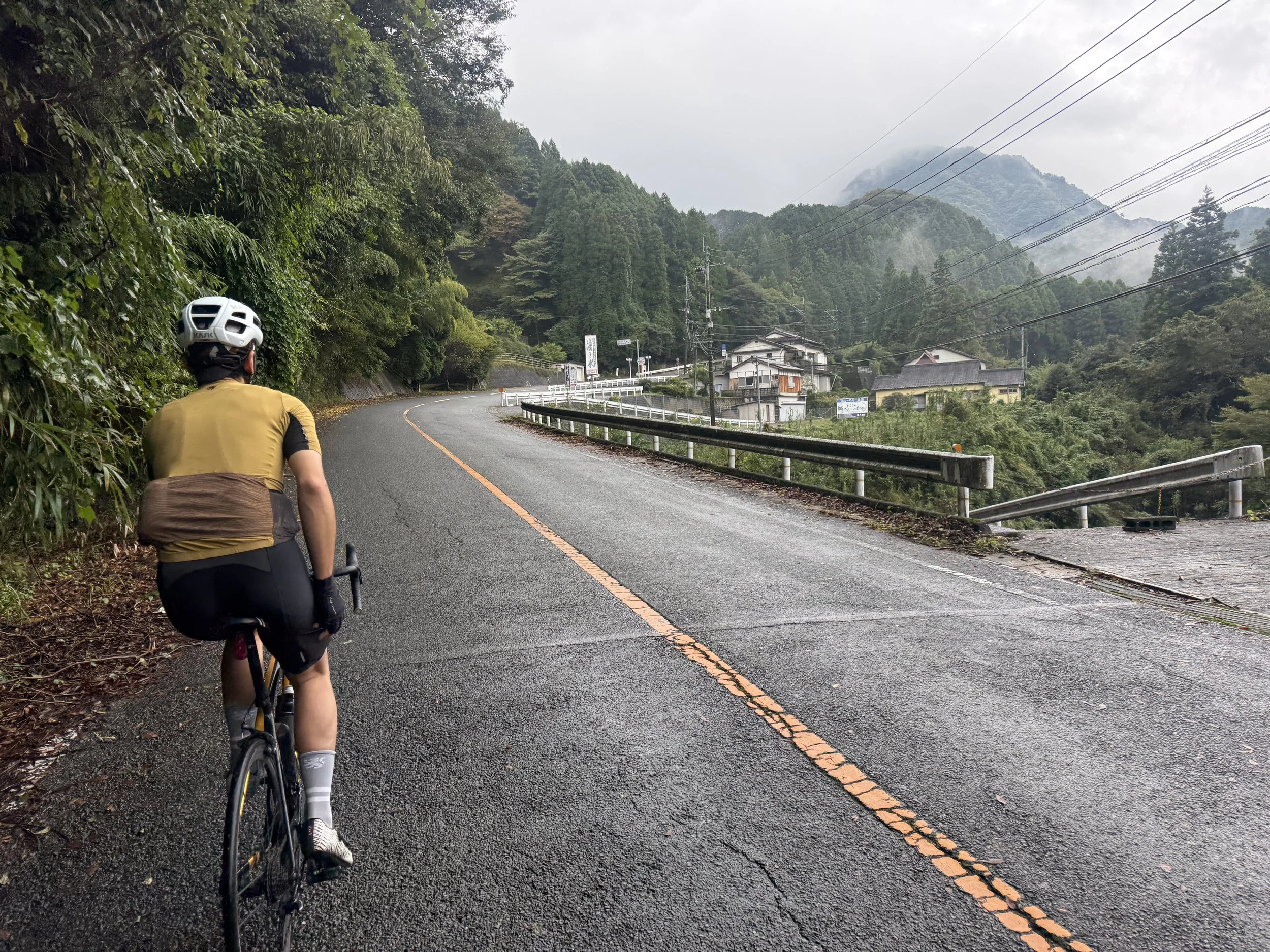
A taste of what’s to come
It was sad to say farewell to the team after three days of riding, exploring, eating and sharing stories. What stood out most was not just the variety of cycling, but the genuine warmth of the people who welcomed us and their enthusiasm for showing us their region.
Despite the rain, it was a successful Famil tour - Fukuoka has so much to offer beyond its well-known city and food scene: quiet coastal roads, challenging mountain climbs, rural villages, centuries-old crafts and a wonderful food culture. There is plenty more for us to explore as we continue developing future Wide Open Road itineraries.
But for now, our next adventure was waiting: WOR Kyushu 2026!
A big thanks again to our guide Yoshida-san and the Kyudensangyo team - the 4 that joined us as well as the team members back in the office (Miyazoe-san, Saisho-san and Rie-san) for all their work supporting inbound cycle tourism. A team that have become friends over the 3+ years we have been working together - thanks to the kind, caring, personal and professional approach.